Toddler sleep regressionGood sleeper,
suddenly
not.
Bedtime battles, 2am visits and 5am starts, from a toddler who used to sleep. Here is why it happens, what actually helps, and when it is worth a chat with your GP or child health nurse.
- 11 to 14 hSleep a toddler needs in 24 hours, naps included
- 2 napsCommon at 12 months. By three, one nap or none
- 2 to 4 wksNo better by then? Talk to your GP
- 30 minOf amber on Sam the Lamb before green means up
What is a toddler sleep regression?
A toddler sleep regression is a stretch of weeks when a child who was sleeping well starts fighting bedtime, waking in the night or rising very early. It is not a medical diagnosis. It usually lines up with something changing: a nap dropping, a new skill, separation worries, illness, or a big change at home. Most of the time it settles with a steady routine and calm, boring nights.
Everyone wakes briefly between sleep cycles, adults included. The goal is not a toddler who never wakes. It is one who knows what to do when they do.
- Looks like
- Bedtime stalling, night waking, early starts, short or skipped naps
- Often linked to
- Nap changes, new skills, separation anxiety, illness, big changes at home
- What helps
- The same routine, a dark room, one calm response, a clear signal for morning
- See your GP if
- Snoring most nights, breathing pauses, or no better after 2 to 4 weeks
Five reasons good sleep wobbles
Usually two or three of these land in the same month.
The nap is changing
Raising Children Network notes many toddlers have two naps at 12 months, and by three most have one nap or have dropped it. In between, a nap that is too long or too late can push bedtime back and make nights restless.
Big new skills
Walking, climbing, talking. Some toddlers practise their new skills in the cot at 2am.
Separation and fears
Toddlers know you exist when you leave the room, and they would like you back. Imagination grows too, which is why fear of the dark often arrives around two.
Changes at home
A new sibling, childcare, a holiday, moving house or out of the cot. Even happy changes unsettle sleep.
Feeling unwell
Colds and teething disrupt sleep. Comfort them through it, then bring the usual routine back once they are well.
Four things to do, starting tonight

Keep the routine, and keep it short
Bath, pyjamas, teeth, one book, lights down, in the same order every night. Raising Children Network says a bedtime routine helps toddlers settle, and settle again when they wake overnight.
If bedtime has become a negotiation, give the routine a clear end. Our ten-minute wind-down ends itself, so you are not the one saying no.

Dark, cool and a little dull
In an Australian summer light can arrive before six, so a toddler up at 5am may simply be answering the sun. Blackout coverage helps, and any nightlight should be dim and warm. Red and amber light are gentler at night than white or blue.
Keep power cords for clocks, nightlights and sound machines out of reach of the bed. Red Nose lists electrical cords among the room hazards to secure.

One calm response, every time
Check the basics first: unwell, too hot or cold, scared? If they are fine, keep it brief and boring. Low voice, lights off, back to bed. A response that changes every night invites more testing.
Not sure which kind of wake-up it is? Work through our 2am decision tree. Raising Children Network notes it can take one to three weeks for a toddler to adjust to a new way of settling.

Show them when morning starts
A toddler cannot read a clock, but they can read a colour. Sam the Lamb glows red through the night, turns amber for the last 30 minutes, then green when it is okay to get up, and his eyes open at the wake-up time you set.
Introduce it in the daytime and praise any progress. Read when to introduce a sleep trainer before you start.
Usually fine to ride out if
- It started around a change: a nap, a new skill, childcare, a sibling
- Your toddler is well, eating and happy in the day
- Nights improve when you keep the routine steady
- It is getting better within a few weeks
Talk to your GP or child health nurse if
- Your child snores most nights, even when they are well
- They pause, gasp or struggle for breath while asleep
- There is no improvement after 2 to 4 weeks, or it has gone on for more than a month
- Night terrors come with snoring or breathing problems
- Your child seems unwell, or you are not coping
Davy, Sam or Sarah?
All three teach the same rule: stay in bed until it is time to get up. For a full side-by-side, see Davy, Sam or Sarah.

Sam the Lamb
A clear red, amber, green signal for toddlers from about two
- Morning signal
- Eyes open, screen turns green
- Nightlight
- All night, or off after 5, 15 or 30 min
- Nap timer
- 3 to 180 minutes
- Power
- USB cable or 4 AA batteries
- Price
- From $62.86

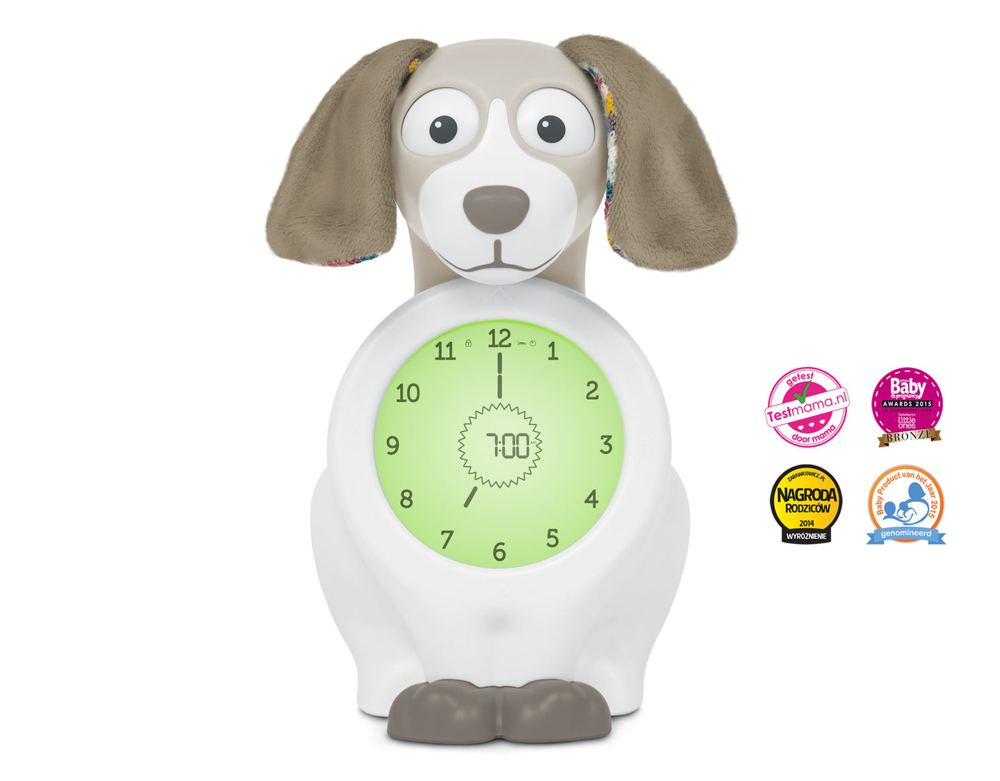
Davy the Dog
The same eyes-open wake-up, with soft plush ears
- Morning signal
- Eyes open at the time you set
- Last 30 minutes
- Amber screen
- Key lock
- Locks itself after 1 minute
- Price
- $73.95

Sarah the Rabbit
Visual sleep and wake cues with a gentle nightlight
- Morning signal
- Clear visual cue
- Nightlight
- Built in
- Price
- $59.95
Not sure which suits your child? Compare every ZAZU sleep trainer.
Darker rooms, longer naps
We've struggled with daytime naps for months, but this curtain has changed everything. Our nursery stays dark and cool, even during sunny afternoons.
We can't install blinds in our apartment, so this was ideal. Total blackout, no marks on glass, and folds away neatly.


A clear signal for morning
Sam the Lamb sleep trainer clock in grey. $62.86
The same Sam, in a warm sandy colour. $73.95
Davy the Dog sleep trainer clock in taupe. $73.95
Sarah the Rabbit sleep trainer clock. $59.95
Portable Blackout Curtain with suction caps, for home and travel. $64.95
Free shipping on orders over $99. 12-month Australian warranty. Ships from Melbourne within 24 to 48 hours.
Toddler sleep questions
Is toddler sleep regression real?
It is not a medical term, but the pattern is real: a few weeks of bedtime battles, night waking or early starts, usually linked to a nap change, a new skill, separation worries, illness or a change at home.
At what age do toddler sleep regressions happen?
There is no fixed schedule. Parents often notice changes around 18 months and again around two, when toddlers are learning fast and naps are changing.
How long does a toddler sleep regression last?
Usually a few weeks. Raising Children Network notes it can take one to three weeks for a toddler to adjust to a new way of settling, and suggests talking to your GP if there is no improvement after 2 to 4 weeks.
Should I drop my toddler's nap if they will not sleep at night?
Not straight away. Try a shorter or earlier nap first, so there is a longer awake stretch before bed.
Do sleep trainer clocks help with early waking?
They can help a toddler learn when it is okay to get up, because a colour change is something they can see without reading a clock. They work best with a dark room and a consistent routine.
Why has my toddler started waking at 5am?
Common reasons are early light, a bedtime that has drifted, or a nap that has changed. A darker room and a clear wake-up signal often help.
When should I see a doctor about my toddler's sleep?
See your GP or child and family health nurse if your child snores most nights even when well, pauses or struggles for breath while asleep, seems unwell, or if sleep is no better after 2 to 4 weeks.
Same routine, dark room, clear morning.
Most sleep regressions pass. What speeds them along is boring consistency, and a signal they can see for morning. For long summer mornings, read daylight at 5am.